20 Jul 2026
Unpacking the Mechanics of Lightning-Fast Mobile Live Games on Offshore Sites Attracting British Players
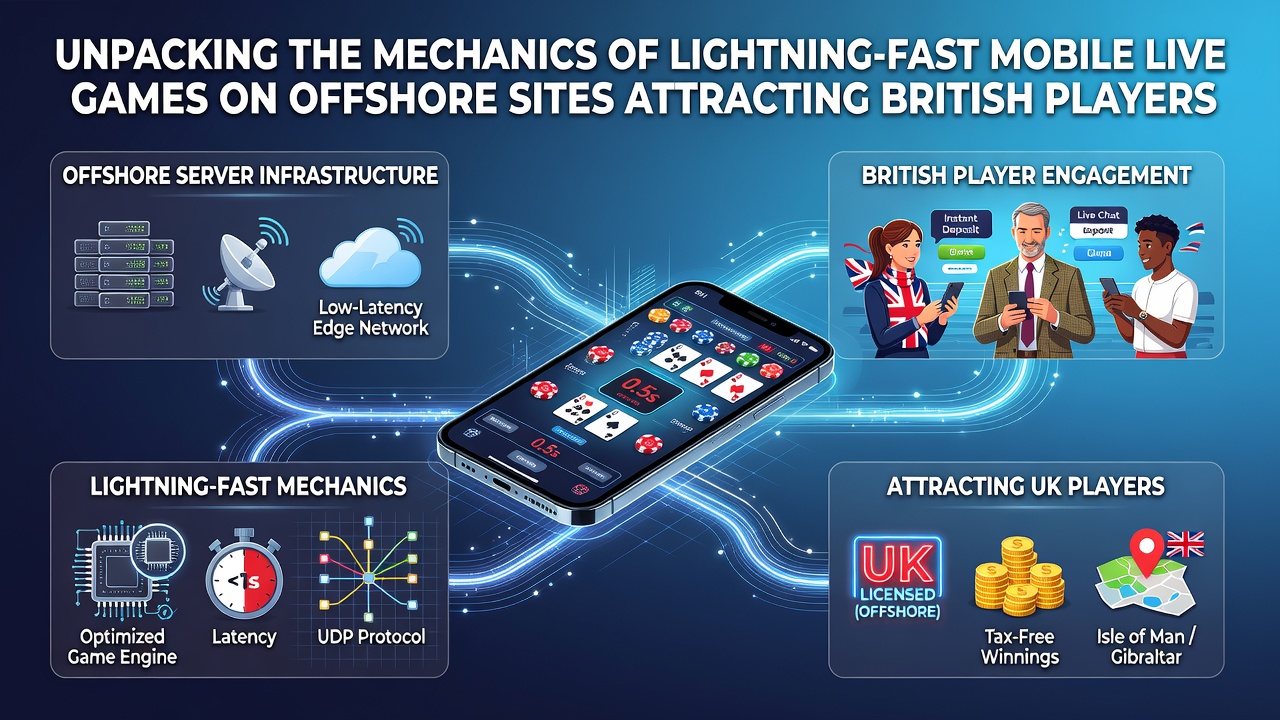
Offshore platforms have refined the core systems that power live dealer sessions on mobile devices, allowing British players to access streams with minimal delay and consistent frame rates. These sites rely on distributed server networks positioned near major internet exchange points, which reduces the distance data must travel and keeps latency under 100 milliseconds in many cases.
Core Streaming Architecture
Live game feeds originate from studios equipped with multiple camera angles and optical character recognition systems that track cards, wheels, and dice in real time. The video signal travels through dedicated content delivery networks that cache segments at edge servers, enabling devices to pull the next frame without waiting for the origin source. Audio synchronization occurs separately through low-bandwidth channels so that voice commentary remains aligned even when network conditions fluctuate.
Encryption protocols wrap each data packet before transmission, protecting player information while adding only a few milliseconds to processing time. Adaptive bitrate technology monitors connection speed and switches resolution automatically, preventing buffering during peak evening hours when British traffic increases.
Mobile-Specific Optimizations
Offshore operators build dedicated apps and progressive web applications that preload game assets during the login sequence. Touch-responsive controls replace traditional mouse inputs, with haptic feedback confirming bets placed on blackjack tables or roulette layouts. Battery and data usage monitoring runs in the background, throttling non-essential animations when device resources drop below set thresholds.
Research from the University of Malta indicates that optimized rendering pipelines can cut CPU load by up to 35 percent compared with standard browser implementations. Developers achieve this through native code modules that handle video decoding directly on the graphics processor rather than routing everything through the main application thread.
Integration of Random Number Generators with Live Elements
Many hybrid games combine physical dealer tables with digital side bets whose outcomes rely on certified random number generators. These RNG modules operate on isolated servers that receive timestamped triggers from the live stream, ensuring results appear within the same second as the physical action. Offshore sites publish audit summaries from independent testing agencies, detailing the statistical distribution of outcomes across millions of rounds.
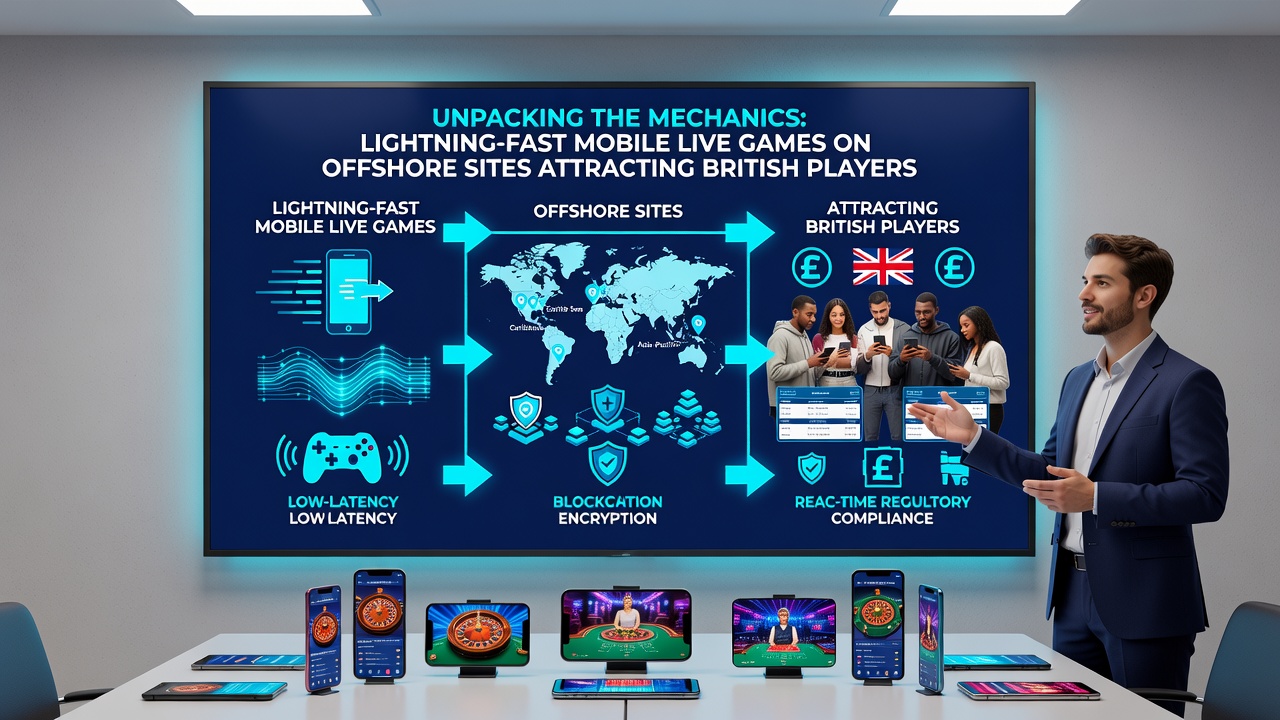
Players notice that balance updates occur almost instantly after each round concludes. This speed stems from direct database writes that bypass intermediate queues, combined with push notification services that alert the mobile client the moment a transaction clears. In July 2026 several platforms reported average cashout times dropping below 90 seconds for verified accounts using cryptocurrency rails.
Regional Traffic Routing and Compliance Layers
Offshore sites maintain separate routing tables for traffic originating from the United Kingdom. These tables direct connections through jurisdictions with established licensing frameworks such as the Malta Gaming Authority or the Kahnawake Gaming Commission. Geolocation checks occur at multiple points during the session, confirming the player remains within permitted boundaries without interrupting gameplay flow.
Data from the Canadian Gaming Association shows that cross-border live gaming volumes grew steadily through early 2026, driven partly by improvements in 5G coverage across urban centers. Similar patterns appear in Australian markets where regulatory sandboxes have allowed operators to test low-latency configurations under controlled conditions.
Security and Fairness Mechanisms
Each game round receives a unique identifier stored across redundant databases. Players can request round histories that include video timestamps, card sequences, and payout calculations. Smart contract elements on certain platforms record these details on public ledgers, providing an immutable audit trail that external reviewers can verify without accessing proprietary systems.
Multi-factor authentication integrates with device biometrics so that returning users bypass lengthy verification steps after the initial setup. Session tokens rotate every few minutes, limiting the window during which an intercepted credential could remain valid.
Conclusion
The technical stack supporting fast mobile live games on offshore platforms continues to evolve through incremental gains in network efficiency, rendering performance, and transaction processing. British players encounter these improvements as shorter wait times between rounds and quicker balance updates, outcomes produced by coordinated engineering choices across studios, content networks, and mobile software layers. Ongoing measurements from industry testing bodies will determine how these systems scale as device capabilities and connection speeds advance further.